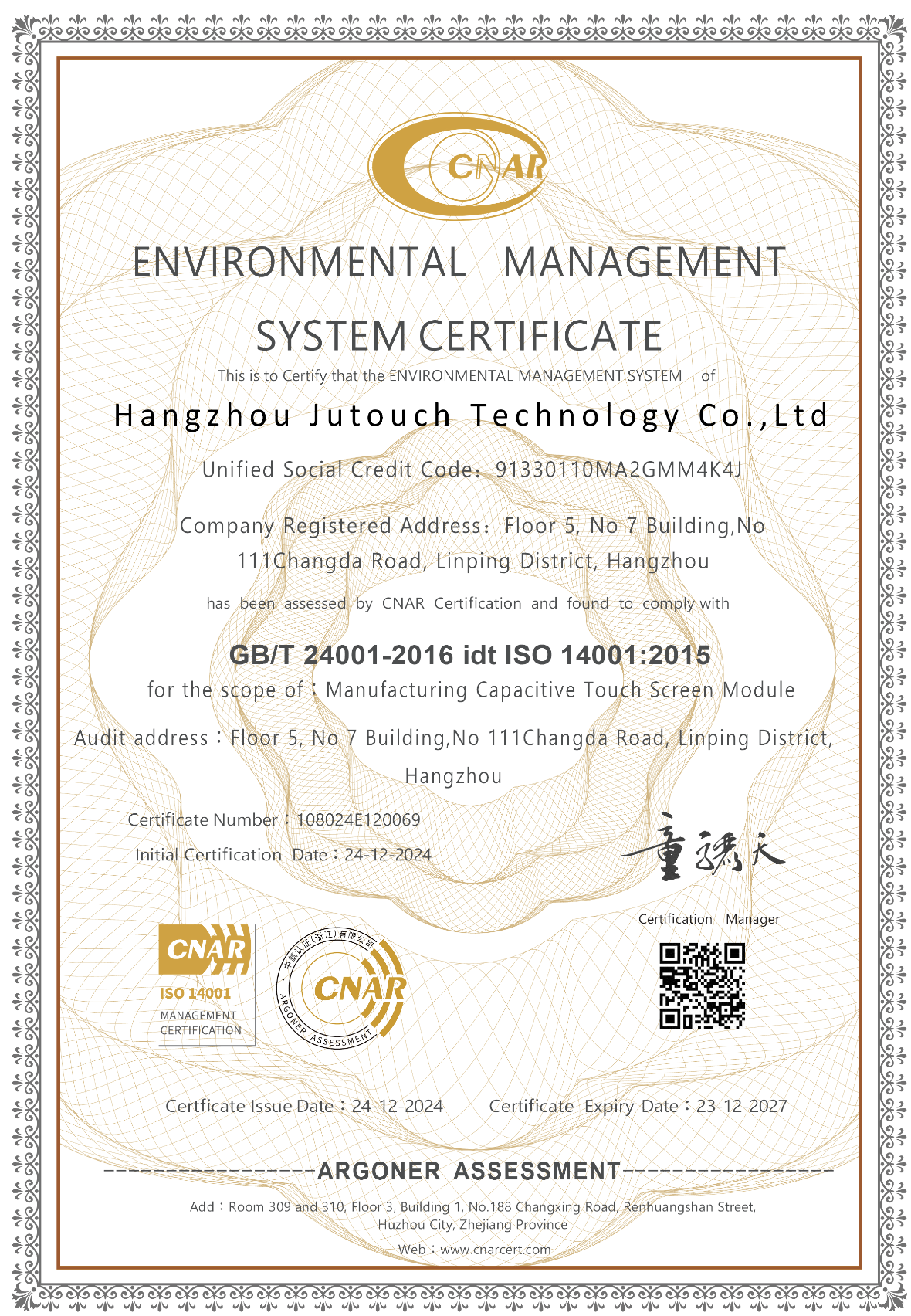
ISO14001
Item specifics
- Expiration Date
- 2024/12/24 - 2027/12/23
- Certification bodies
- CNAR
Certificate description
An ISO 14001 certificate is a formal credential issued by an accredited third‑party certification body, confirming that an organization’s environmental management system (EMS) fully complies with the requirements of the ISO 14001 standard – the globally recognized benchmark for environmental stewardship. This standard provides a systematic framework for organizations to manage their environmental responsibilities in a way that contributes to the environmental pillar of sustainability. It is built on core principles such as the protection of the environment, prevention of pollution, compliance with legal and other obligations, and the continual improvement of environmental performance. The certificate is not a permanent award; it is the outcome of a thorough and independent audit process that evaluates how effectively the organization identifies, monitors, and controls its environmental aspects and impacts.
The certification journey usually starts with the organization establishing an EMS that aligns with the standard’s clauses, including environmental policy, planning, implementation and operation, checking and corrective action, and management review. After the system is operational, the organization undergoes a two‑stage audit conducted by the certification body. The first stage reviews documentation and readiness, while the second stage is an on‑site verification of the actual implementation and effectiveness of the EMS. Auditors collect objective evidence to ensure that processes are not only documented but also actively managed, measured, and reviewed. Any non‑conformities found must be corrected before the certificate can be issued. Once obtained, the certificate is typically valid for three years, with regular surveillance audits scheduled to confirm ongoing conformity and to encourage continuous improvement in environmental performance.
Holding an ISO 14001 certificate offers a wide range of tangible advantages. Internally, it helps organizations reduce waste, lower energy and resource consumption, minimize environmental risks, and improve operational efficiency – often resulting in significant cost savings. It also fosters a culture of environmental awareness among employees and promotes better regulatory compliance, reducing the likelihood of fines or legal actions. Externally, the certificate enhances the organization’s reputation and credibility with customers, investors, regulators, and the community. Many supply chains and public tenders now prefer or require ISO 14001 certification as evidence of sustainable practices, giving certified organizations a competitive edge. Furthermore, the standard encourages a lifecycle perspective and a risk‑based approach, enabling proactive identification of environmental aspects and the implementation of preventive measures.
Ultimately, the ISO 14001 certificate is far more than a decorative document; it signifies an organization’s genuine commitment to minimizing its environmental footprint while maintaining economic viability. It demonstrates that the organization has established a robust, structured, and transparent system for managing environmental issues, with clear objectives, performance indicators, and regular reviews. By continuously refining its EMS, the organization can adapt to evolving environmental regulations, stakeholder expectations, and technological innovations, ensuring long‑term resilience and responsible growth. In essence, the certificate provides both internal assurance and external validation that the organization is actively contributing to a more sustainable future, making it an indispensable asset for any responsible enterprise in today’s eco‑conscious marketplace.