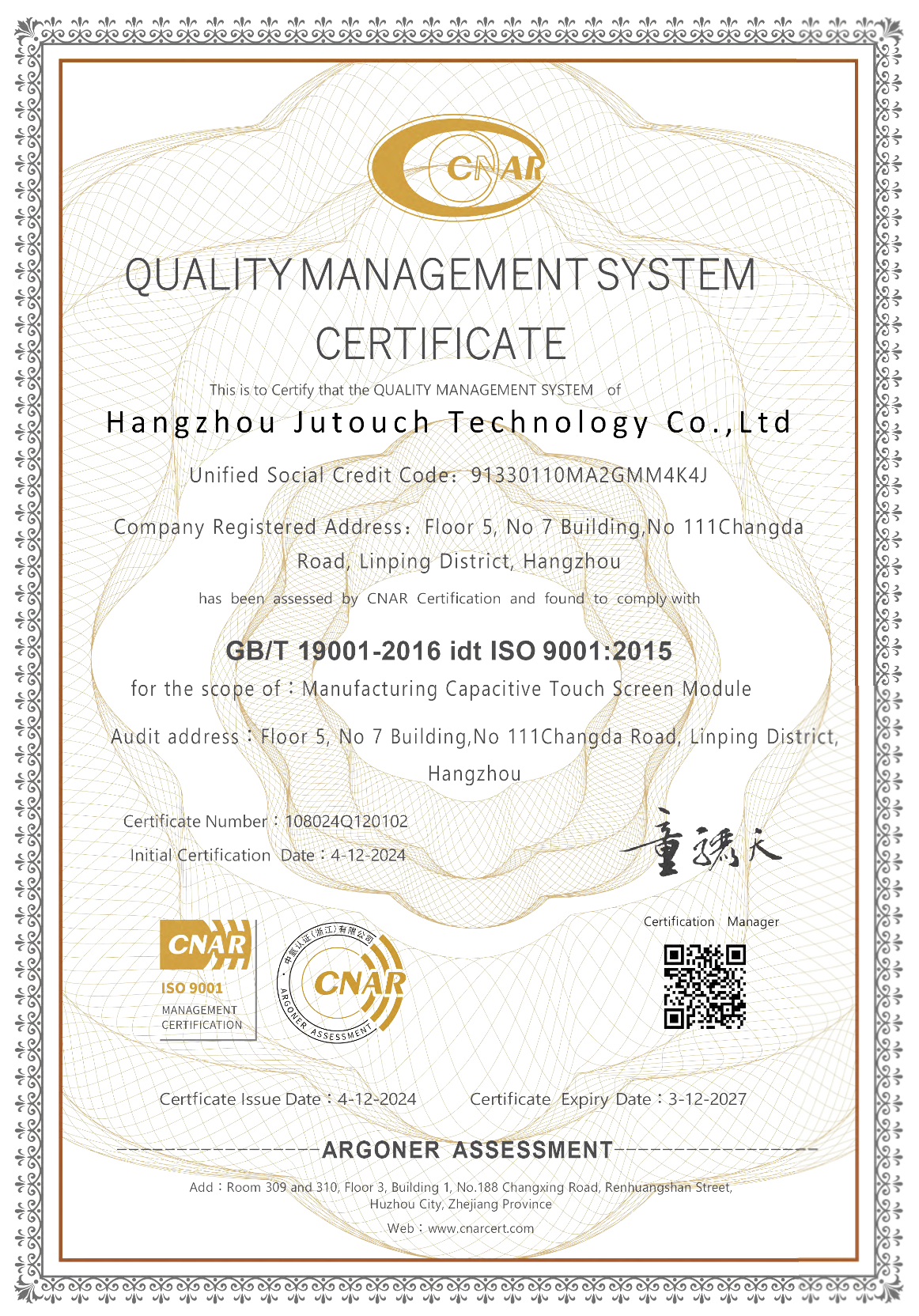
ISO9001
Item specifics
- Expiration Date
- 2024/12/4 - 2027/12/3
- Certification bodies
- CNAR
Certificate description
An ISO 9001 certificate is a formal document issued by an accredited third‑party certification body, confirming that an organization’s quality management system (QMS) fully complies with the requirements of the ISO 9001 standard, which is the world’s most widely recognized quality management framework. This standard is based on a number of quality management principles including a strong customer focus, the involvement of top management, a process‑oriented approach, and the commitment to continual improvement. The certificate is not a one‑time award but rather the result of a rigorous audit process that assesses the effectiveness of the organization’s QMS in delivering consistent products or services that meet both customer and regulatory requirements.
The certification process typically begins with the organization implementing the QMS according to the standard’s clauses, followed by a thorough documentation review and an on‑site audit by the certification body’s auditors. During the audit, evidence is gathered to verify that processes are not only documented but also effectively executed, monitored, and measured. Any non‑conformities identified must be addressed through corrective actions before the certificate can be granted. Once awarded, the certificate is valid for a specific period, usually three years, subject to periodic surveillance audits to ensure ongoing conformity and continuous enhancement of the system.
Holding an ISO 9001 certificate brings numerous tangible benefits to the organization. Internally, it fosters a culture of quality, reduces waste and errors, improves operational efficiency, and enhances employee awareness of their roles in quality assurance. Externally, it serves as a powerful marketing tool, building trust and confidence among customers, suppliers, and stakeholders. Many industries and government contracts require ISO 9001 certification as a prerequisite for doing business, thus opening up new market opportunities. Moreover, the standard encourages a risk‑based thinking approach, enabling the organization to proactively identify and mitigate potential issues before they affect product quality or customer satisfaction.
Ultimately, the ISO 9001 certificate is more than just a piece of paper; it is a symbol of an organization’s dedication to excellence and its ongoing journey toward higher performance. It demonstrates that the organization has established a robust framework for managing quality, with clear policies, objectives, and performance indicators. By continuously reviewing and improving its QMS, the organization can adapt to changing market demands and technological advancements, ensuring long‑term sustainability and growth. In summary, the certificate provides both internal and external validation that the organization is capable of consistently delivering quality and value, making it a vital asset for any forward‑looking enterprise.