What Is IK10 Impact Resistance and Why Does It Matter for Industrial Touch Displays?
- Share
- Issue Time
- Jul 15,2026
Summary
Learn what IK10 impact resistance means, how it is tested, and why IK10-rated industrial touch displays provide superior durability, safety, and reliability for harsh environments.
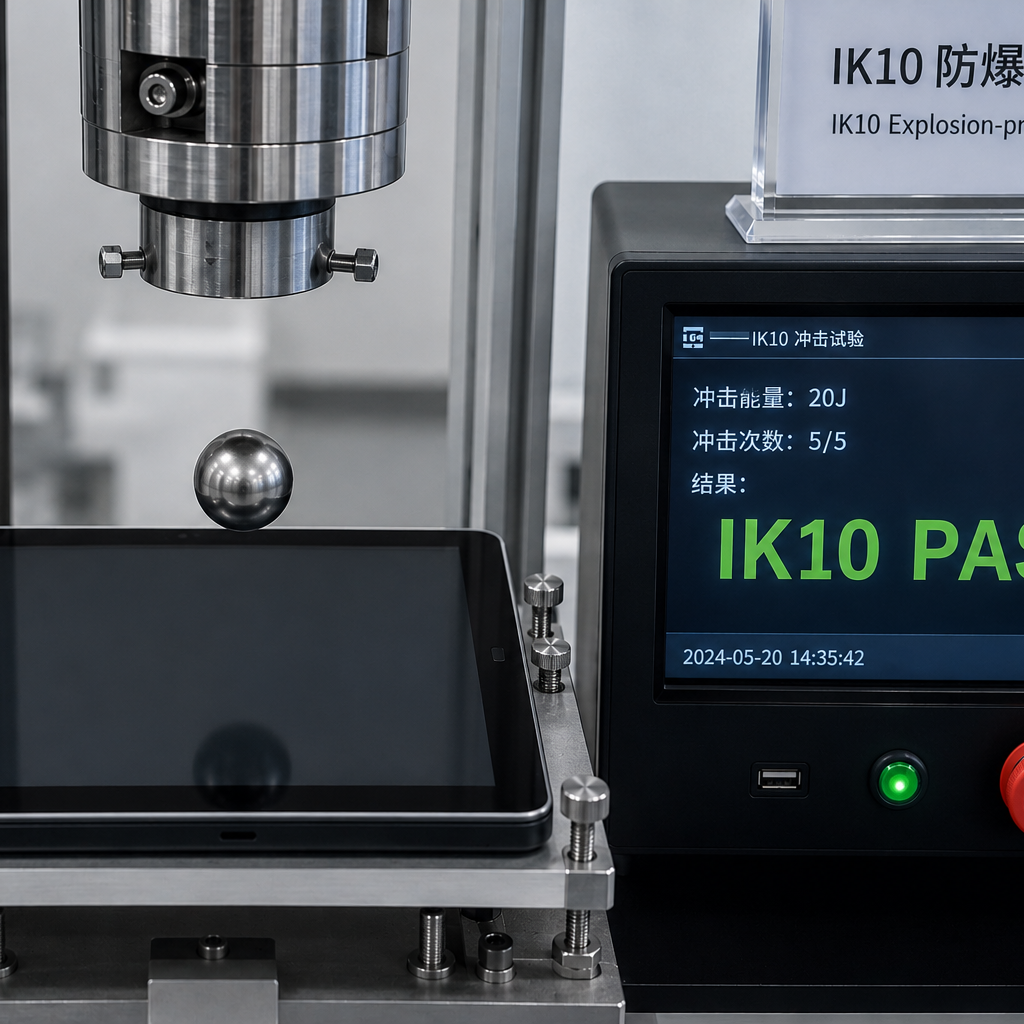
Industrial touch displays are often deployed in environments where accidental impacts, heavy equipment, and continuous operation are part of everyday use. Whether installed on factory machinery, self-service kiosks, agricultural vehicles, or outdoor charging stations, the display must withstand physical abuse without compromising performance.
This is where IK10 impact resistance becomes an essential feature. An IK10-rated display is designed to resist high-impact forces, helping protect the screen from damage and ensuring reliable operation in demanding environments.
In this article, we'll explain what IK10 impact resistance means, how it is tested, and why it matters when selecting an industrial touch display.
What Is an IK Rating?
The IK rating is an international standard defined by IEC 62262, used to classify the level of protection an enclosure provides against external mechanical impacts.
The rating ranges from IK00 (no protection) to IK10, with higher numbers indicating greater resistance to impact energy.
For industrial displays, the IK rating provides a reliable way to compare the durability of different products and ensure they meet the requirements of harsh operating environments.
What Does IK10 Mean?
IK10 is the highest commonly used impact protection level for industrial display products.
To achieve an IK10 rating, the display must withstand an impact energy of 20 joules, which is typically tested by striking the surface with a 5 kg steel hammer dropped from a height of 400 mm.
Passing this test means the display remains structurally intact and continues to function after significant mechanical impact.
Why Is IK10 Important for Industrial Touch Displays?
1. Protection Against Accidental Impact
Industrial workplaces are full of potential hazards. Tools may be dropped, equipment may vibrate during operation, or operators may accidentally strike the display.
An IK10-rated touch display helps prevent:
Cracked cover glass
Damaged touch sensors
LCD breakage
Costly equipment downtime
This added durability is especially valuable for equipment that operates continuously in demanding environments.
2. Improved Equipment Reliability
Replacing a damaged display can be expensive and time-consuming, particularly for industrial systems installed in remote or difficult-to-access locations.
Using an IK10-certified display reduces the risk of unexpected failures, helping manufacturers lower maintenance costs while improving overall system reliability.
3. Better Safety for Users
Broken glass can create safety risks for operators.
Many IK10 industrial displays use laminated safety glass, which keeps broken fragments bonded together if the glass is damaged. This minimizes the risk of injury and allows equipment to remain safer until maintenance can be performed.
For industries where operator safety is a priority, laminated safety glass provides an additional layer of protection.
4. Longer Product Lifespan
Industrial equipment is expected to remain in service for many years.
An IK10-rated display is better equipped to handle repeated impacts, vibration, and harsh operating conditions throughout its lifetime, reducing replacement frequency and extending the service life of the equipment.
Technologies That Help Achieve IK10 Protection
Achieving IK10 performance involves more than using thicker glass. A durable industrial display combines multiple engineering technologies, including:
Chemically strengthened cover glass
Laminated safety glass
Optical bonding to improve structural integrity
High-strength adhesive systems
Reinforced metal frame design
Precision mechanical assembly
Together, these features improve impact resistance while maintaining excellent optical performance and touch sensitivity.
Typical Applications for IK10 Touch Displays
IK10-rated touch displays are widely used in applications where durability is critical, including:
Industrial automation equipment
Manufacturing HMI systems
Agricultural machinery
Construction vehicles
Marine electronics
EV charging stations
Outdoor self-service kiosks
Medical equipment
Transportation systems
Smart city terminals
These applications demand displays that continue to perform reliably despite frequent use and exposure to harsh environments.
Why Choose JuTouch?
JuTouch develops industrial touch display solutions designed for reliability in demanding applications.
Our rugged display solutions can be customized with:
IK10 laminated safety glass
Optical bonding
High-brightness LCDs up to 2000 nits
AG, AR, and AF surface treatments
Water and glove touch support
EMI shielding solutions
Wide operating temperature designs
Custom cover glass and mechanical structures
From engineering consultation to mass production, our team works closely with OEMs and system integrators to deliver durable touch display solutions tailored to each application.
Mechanical durability is just as important as display quality in industrial environments. Choosing an IK10-rated touch display helps protect your equipment from accidental impacts, improves user safety, reduces maintenance costs, and extends product lifespan.
When combined with technologies such as laminated safety glass and optical bonding, IK10 impact resistance provides the level of reliability required for today's industrial applications.
If you're developing equipment for harsh environments, JuTouch can help you create a customized industrial touch display solution that delivers outstanding durability and long-term performance.